

A Remarkable Vivid Pink Taaffeite from Mogok, Myanmar
Occasionally, a gemstone arrives at the laboratory that immediately captures attention. Such specimens are uncommon not only because of their beauty, but also because of their rarity and scientific significance. This article describes the examination and identification of an exceptional 5.72 ct pear-shaped taaffeite originating from Mogok, Myanmar. Prior to cutting, the crystal fragment weighed approximately 10.24 ct and represented part of a much larger crystal that could have produced an extraordinary collector’s specimen.
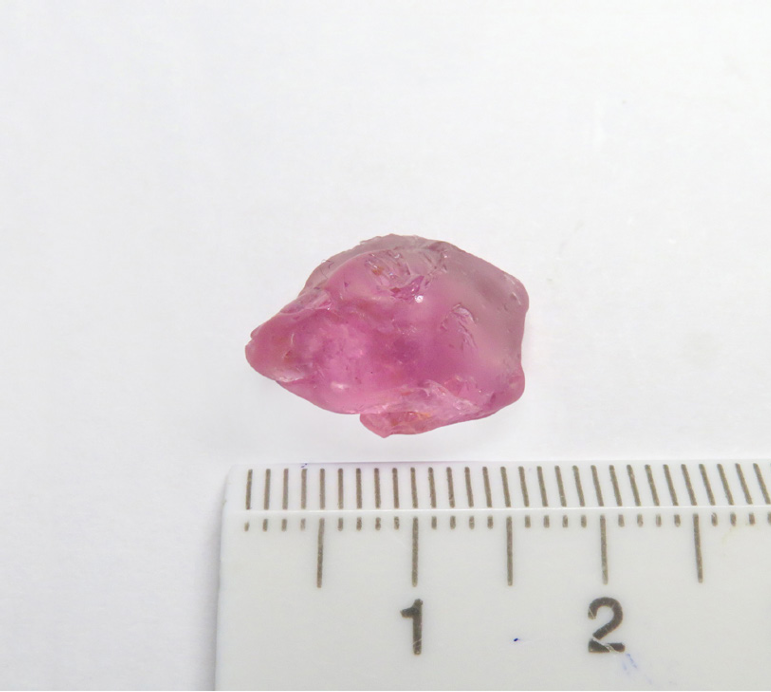
Fig; 1. 10.24 cts rough stone
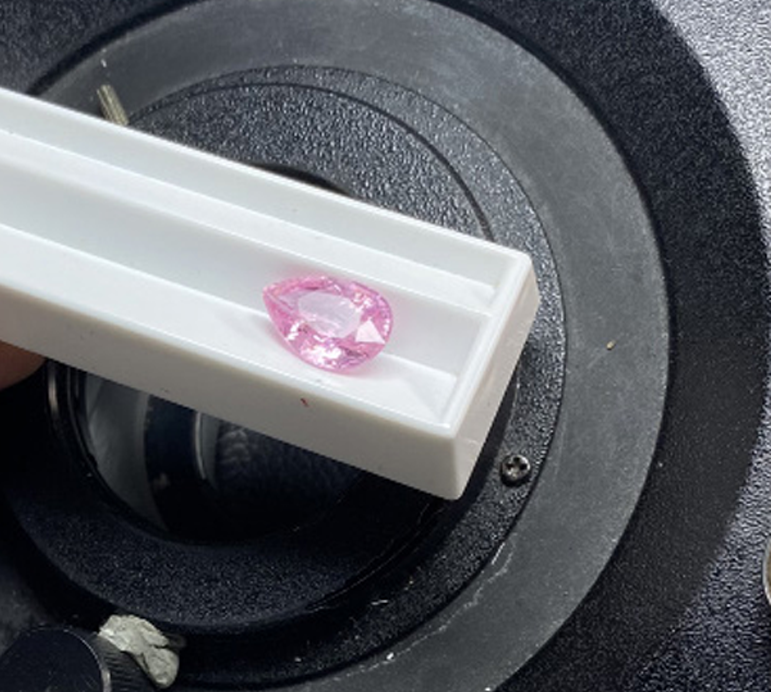
Fig; 2. 5.72 cts pear shape
taaffeite after finishing
The fashioned gemstone weighs 5.72 carats and is fashioned as a pear-shaped mixed brilliant and step cut.
It displays an attractive vivid pink colour with excellent transparency. Although slight to moderate inclusions are present, they do not significantly reduce the gem’s beauty. Instead, the remarkable saturation and brilliance make it an exceptionally appealing gemstone.
Standard Gemmological Examination
Initial examination revealed that the gemstone is optically anisotropic with a uniaxial optical character. Distinct pleochroism was observed, ranging from reddish pink to pinkish purple, a characteristic consistent with chromium-bearing taaffeite.
The gemstone exhibited:
• Refractive Index (RI): 1.715–1.720, with measurable birefringence
• Specific Gravity (SG): approximately 3.60
Although the specific gravity overlaps with both spinel and taaffeite, the presence of double refraction and the measured refractive index clearly exclude spinel and support identification as taaffeite.
Microscopic study
This 5.72 cts taaffeite show its inclusions as crystals, liquid filled flat cavit and liquid feathers which confirm that authenticity of its natural origin.
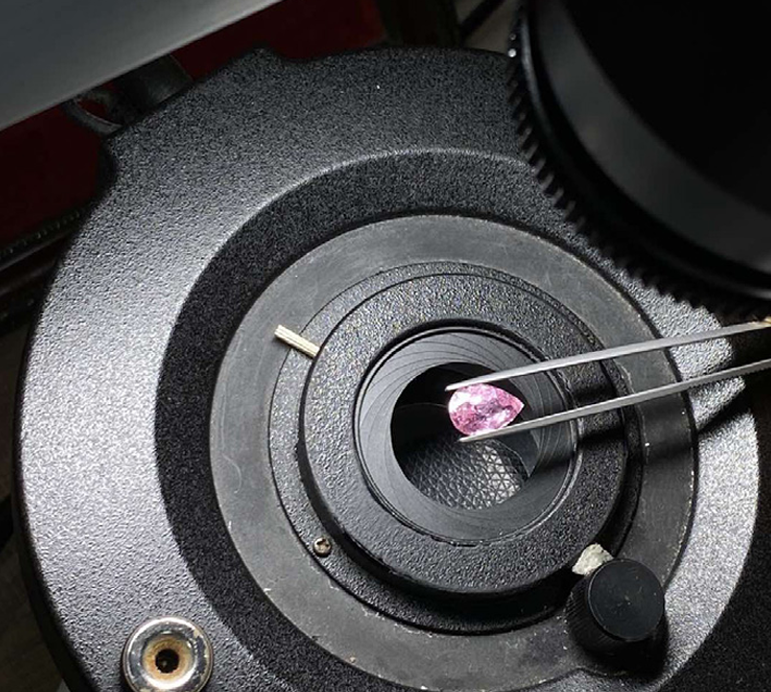
Fig; 3. Under microscope study
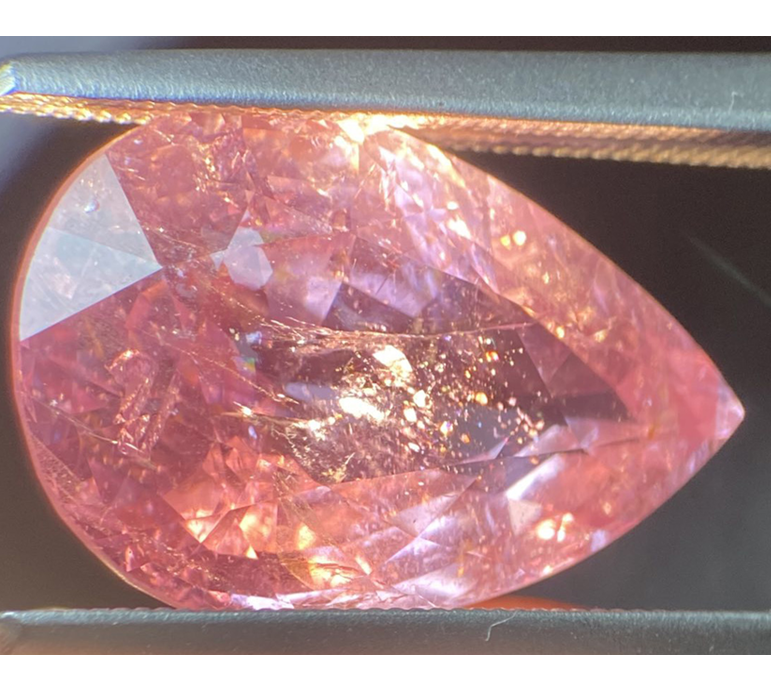
Fig; 4. Crystals, liquid filled flat
cavities and liquid feathers under
30x magnification
Under ultraviolet radiation, the gemstone displayed:
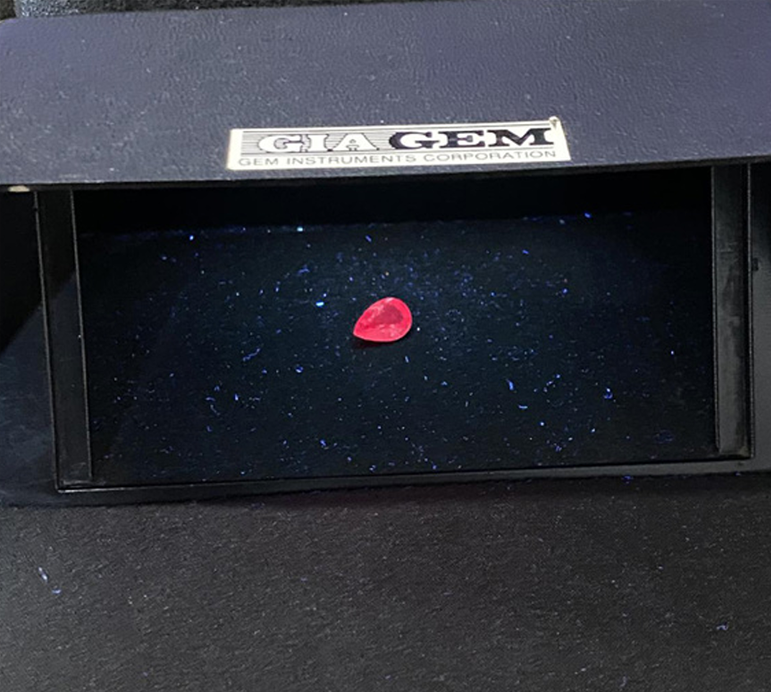
Fig; 5. Fluorescence
under long wave
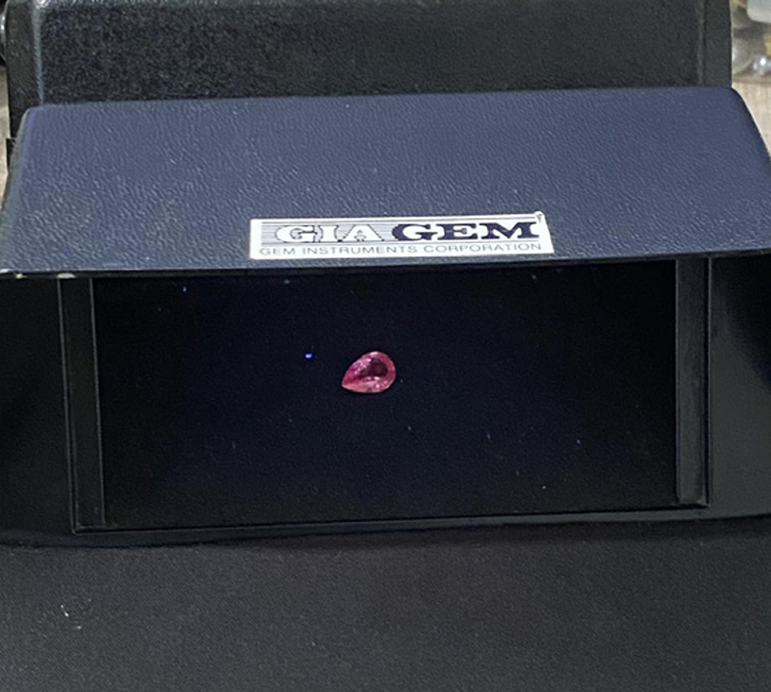
Fig; 6. Fluorescence under
short wave UV
- Long-wave UV: bright red fluorescence
- Short-wave UV: weaker red fluorescence
This fluorescence behaviour is consistent with chromium (Cr³+) acting as the chromophore. Using a handheld visible spectroscope, characteristic chromium absorption lines in the red region were observed, providing additional confirmation of chromium as the colouring element.
Advanced Laboratory Analysis
To further verify the identification, advanced analytical methods were performed. Raman spectroscopy using a 532 nm laser produced spectra matching reference data for taaffeite in the laboratory data
To further verify the identification, advanced analytical methods were performed. Raman spectroscopy using a 532 nm laser produced spectra matching reference data for taaffeite in the laboratory database.
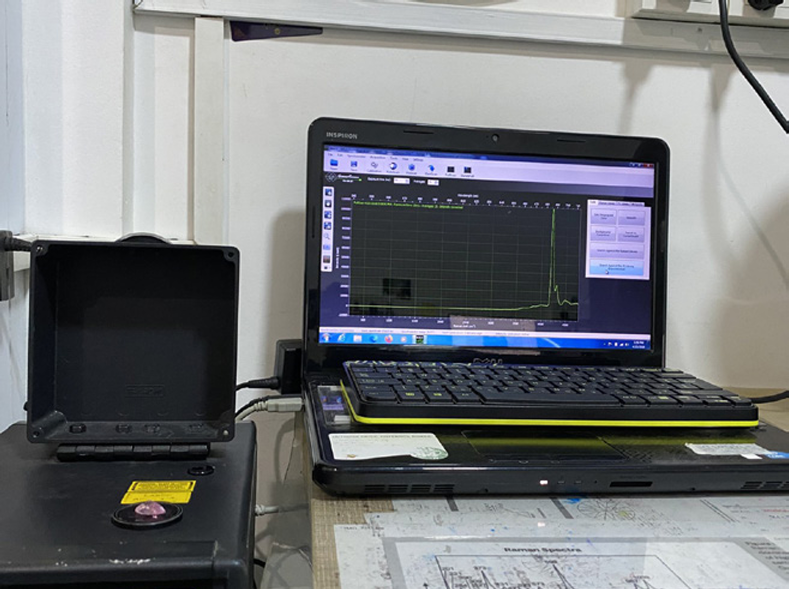
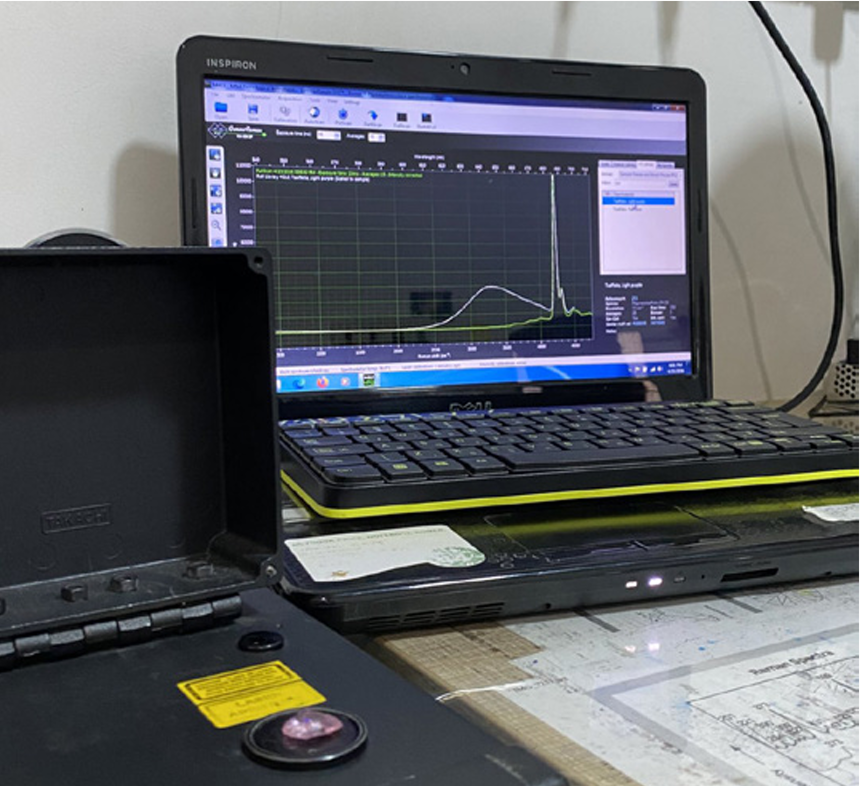
Fig; 7 & 8 . PL spectrum using green laser 532 nm and matching with
taaffeite in the lab data base
Additional analyses included:
- UV-Visible spectroscopy
- UV fluorescence spectroscopy
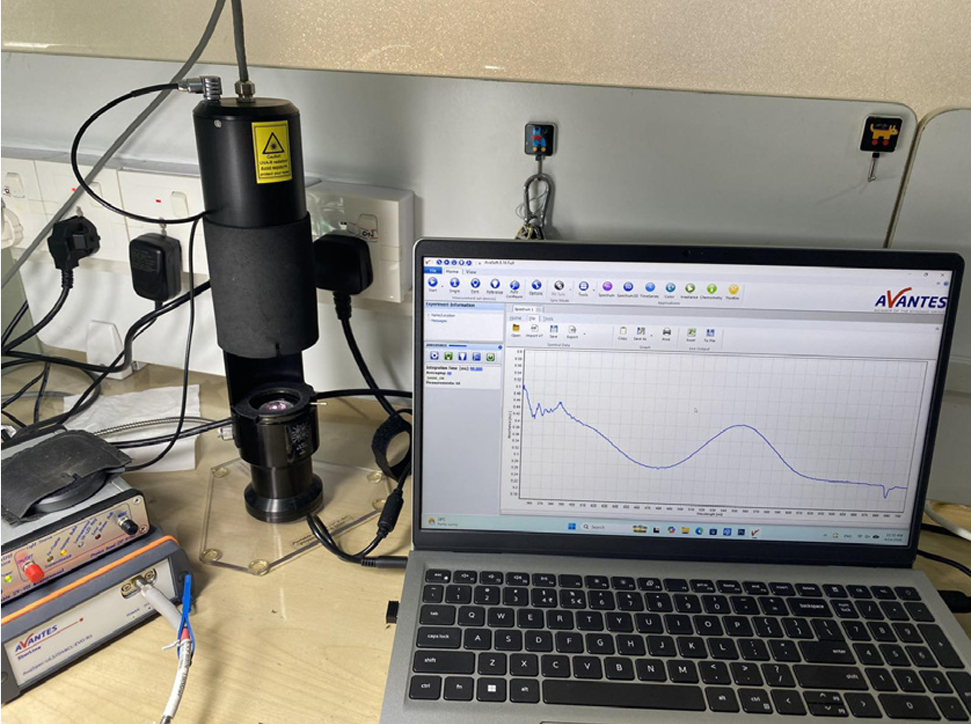
Fig; 9. The visible spectrum 365nm-385 nm and 550 nm band taking by UV-Vis spectroscopy
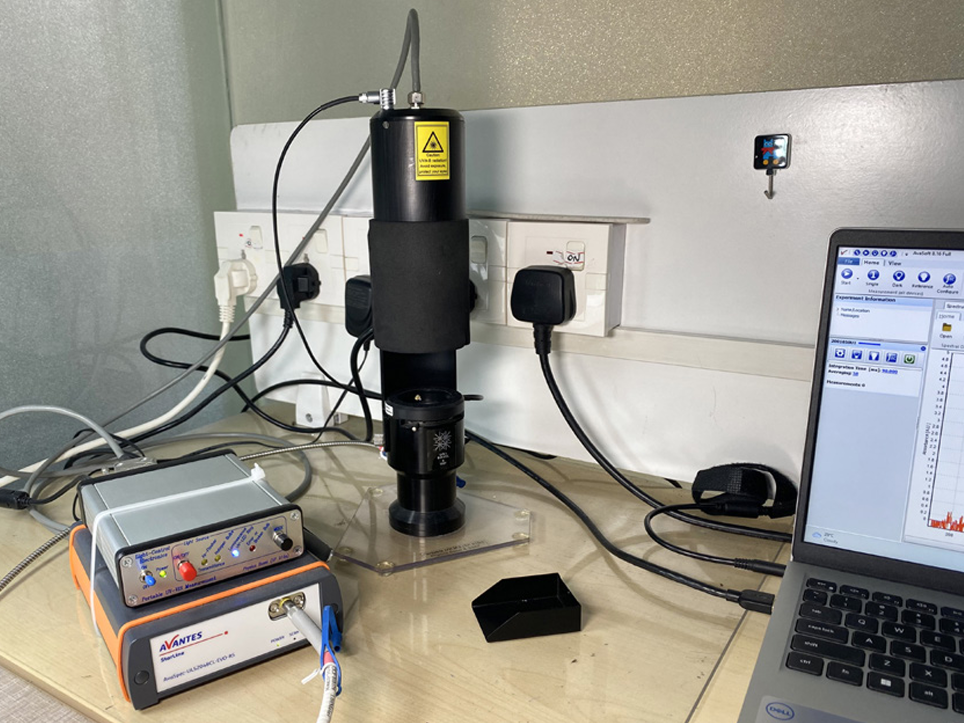
Fig; 10. While using the UV fluorescence spectroscopy
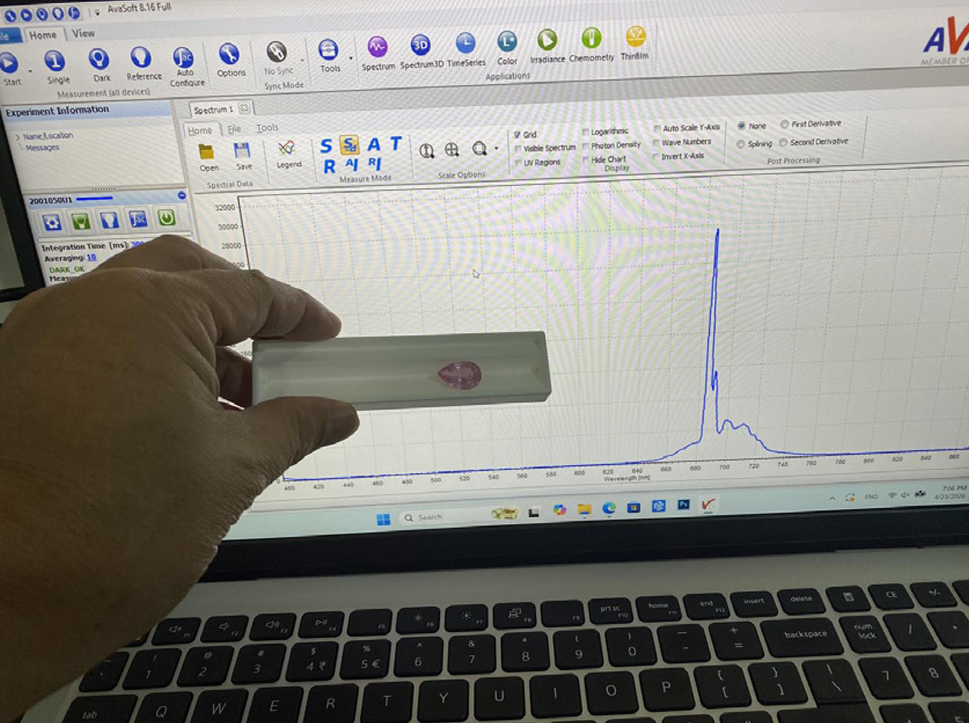
Fig; 11. Showing fluorescence spectrum (686-690 nm) spectrum of taaffeite by Cr +3
The obtained spectra were in excellent agreement with known reference data for natural taaffeite. Taaffeite is among the world’s rarest gem minerals, occurring only in a few localities. Fine transparent specimens above five carats are exceptionally uncommon.
The combination of:
- relatively large size (5.72 ct)
- vivid pink colour
- excellent transparency
- chromium-related optical properties
- confirmed Raman identification
- Mogok origin
makes this gemstone an outstanding example of gem-quality taaffeite.
Conclusion
This specimen demonstrates the importance of combining classical gemmological testing with modern spectroscopic techniques. While standard testing strongly suggested taaffeite, Raman spectroscopy and complementary spectroscopic analyses provided conclusive confirmation. Large vivid pink taaffeites from Mogok, Myanmar remain among the rarest and most desirable collector gemstones encountered in modern gemology